Category Archives for "Uncategorized"

Cyclone Season and Your Site: How Facilities Managers Can Lead a Safer Response

Cyclone Season and Your Site

Cyclone Season and Your Site: How Facilities Managers Can Lead a Safer Response

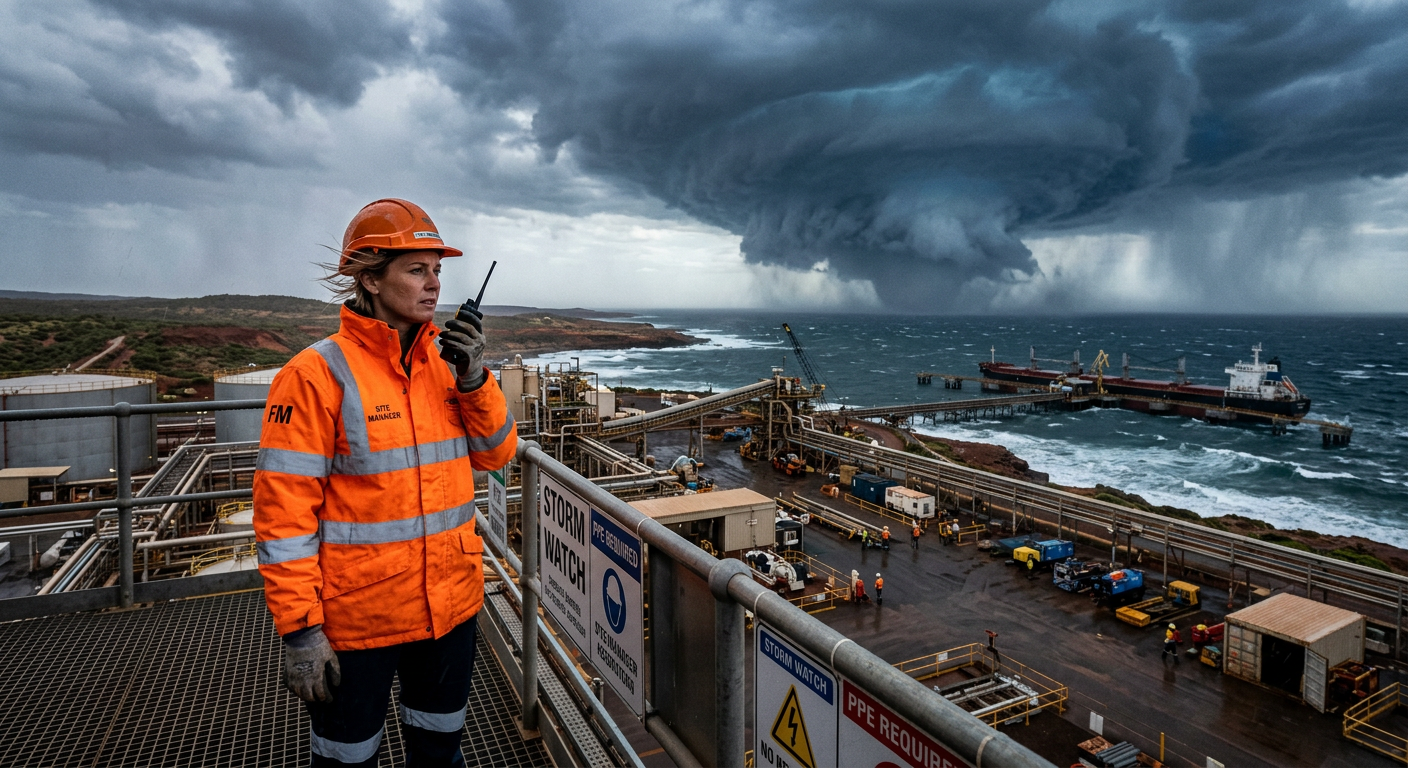
Every cyclone season, facilities along Australia's coastline face the same challenge — destructive winds, storm surge, and flooding with very little warning. The difference between an orderly response and dangerous chaos comes down to your people, your plan, and how well they've trained.

Most cyclone checklists focus on gutters, roofs, and generators. But when conditions deteriorate, it's people who make the difference — wardens and supervisors who understand the warning levels, know your procedures, and can lead others calmly when the pressure is on.
Cyclone Season and Your Site

Why cyclone response starts with people, not buildings


AFP's core business is fire and emergency training / Preparing People For Emergencies — developing wardens, chief wardens, and evacuation coordinators who can manage building-wide incidents, operate occupant warning systems, and apply your site procedures in real time. The competencies that matter in a fire — clear communication, controlled evacuation, safe use of equipment, and understanding of roles — are exactly what you need when your facility is facing destructive winds, rising water, or a prolonged power outage.

Having deployed personally into post-cyclone environments, I've seen what it looks like when responders don't have clear procedures and trained teams behind them. The facilities that recovered fastest were those where people knew exactly what to do and who was in charge.
One SES Volunteer's Story Field Report

Understanding the Australian Warning System


The Australian Warning System (AWS) provides three national warning levels for severe weather events. For facilities managers, the challenge isn't learning the colours — it's translating each level into specific, time-bound tasks your team can actually carry out.

Australian Warning system

LEVEL 1 - Advice
Be alert. Monitor warnings. Begin early preparations — check systems, brief wardens, top up supplies.

LEVEL 2 - Watch and Act
Activate your ECO. Secure loose items, check refuge areas, and confirm communications with tenants.

LEVEL 3 - Emergency Warning
Follow your plan now. Shelter in identified internal refuge areas or evacuate — make the call before conditions become dangerous.

AFP can work with your existing emergency procedures to map AWS levels to site-specific actions and warden checklists. Combined with targeted fire warden, chief warden, and evacuation coordinator training, this gives you a control organisation that understands both the national warning language and your internal processes.

Building a cyclone-ready emergency plan


A strong cyclone response sits inside a broader emergency management plan that covers fire, medical, evacuation, and severe weather scenarios. That plan should identify who is in charge at each stage, which areas are safe to occupy, when to shut down operations, and how you'll communicate if normal systems fail.

AFP can assist facilities managers to review and update site emergency procedures so that cyclone, storm surge, and flood risks are clearly addressed alongside fire and evacuation. We align procedures to relevant Australian standards while keeping them practical for your site size, layout, and staffing levels — and we can tailor warden training using your own diagrams, communication systems, and local risks rather than generic case studies.

Practical cyclone response checklist


Use this as a starting point. AFP can turn it into a site-specific action card and training package for your team.

Before the season

  • Confirm your emergency control organisation (ECO) — all wardens, chief wardens, and deputies are current and rostered across shifts
  • Check that emergency procedures cover cyclones and severe storms, with AWS levels referenced in your internal triggers
  • Engage AFP to deliver or refresh fire warden, chief warden, and evacuation coordinator training using your buildings and systems as the backdrop
  • Test occupant warning systems and document any faults or gaps

When warnings move to Advice / Watch and Act

  • Activate your ECO and brief wardens on the current warning level and likely next steps
  • Secure loose items, check identified refuge areas, and top up emergency supplies
  • Test your occupant warning system and confirm communication protocols with tenants, contractors, and visitors
  • Apply the decision-making and leadership skills developed in training to keep preparations calm and controlled

At Emergency Warning

  • Use your AWS-aligned procedures to decide whether occupants should shelter in place or evacuate — make the call before conditions deteriorate
  • Wardens and chief wardens coordinate movements, confirm head counts, and keep people away from glazing and non-structural elements
  • Maintain contact with the incident controller and log the timing of major actions, outages, and incidents

After the cyclone

  • Respect any "Not safe to return" messaging — do not move people into damaged areas until authorities confirm it is safe
  • Arrange inspections of fire and life safety systems once access is allowed
  • Conduct a structured debrief — AFP can support post-incident reviews and recommend targeted training or procedure changes

Cyclones are multi-hazard events


You may simultaneously face loss of power, damaged fire systems, water ingress, access restrictions, and anxious occupants. Facilities managers can't prevent the weather — but they can invest in people, plans, and systems that perform under stress.

AFP's focus on fire safety training, emergency procedures, and warden development makes us a ready-made partner for the human side of cyclone resilience. By combining AWS-aware planning with competent wardens and clear procedures, you give your site the best possible chance of getting through the next cyclone with fewer injuries, less damage, and a faster return to normal operations.

If you're reviewing your emergency procedures or planning your next warden training block, AFP can help you integrate cyclone and severe weather response into the same programme you already use for fire and evacuation. Strengthen your team’s readiness with a unified, all‑hazards approach that keeps your people safer and your compliance on track.

For more information, call us on 1300 80 3473.
Cyclone Deployment: One SES Volunteer’s Story

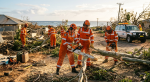
Queensland SES volunteers in orange uniforms clearing cyclone debris with chainsaws

Inside a Cyclone Deployment: One SES Volunteer's Story

Australian Fire Protection (AFP) trainer, James Fludder deployed with the Queensland SES to assist communities devastated by Tropical Cyclone Narelle. Here's what he experienced on the ground — and what it reinforced about the human side of emergency response.

When Tropical Cyclone Narelle made landfall on Western Australia's northwest coast, the scale of impact quickly became clear. Communities around Exmouth, Carnarvon, and Coral Bay faced widespread damage — and our Queensland SES taskforce was heading west to help.

A mission across the country


Our Queensland taskforce consisted of 20 skilled operators supported by three liaison members, allowing seamless integration with Western Australia's Department of Emergency Services. Divided into five teams of four, we mobilised with less than 24 hours' notice as the Category 4 system was making landfall. Geraldton was initially designated our staging location, but shifting conditions meant adapting on the fly — one team drove north to Carnarvon while the remaining members were airlifted to Exmouth across three separate flights, each step coordinated between agencies to keep the operation moving.

First impressions in Exmouth


On arrival, reality hit hard. Our accommodation reflected the post-cyclone landscape — no power, no running water, and limited communications for several days. Yet in true SES spirit, everyone adapted quickly, setting up functional facilities and keeping morale high. Meals were basic, showers scarce, but teamwork carried us through.

"Despite the devastation, the determination of local residents was striking. Their resilience became the driving force for everything we did."

Exmouth, perched on the North West Cape, had taken Narelle's full fury. Winds exceeding 250 km/h had stripped roofs, downed power lines, and scattered debris through every street. The usual sounds of tourism had vanished, replaced by a new rhythm: buzzing chainsaws and neighbours working side by side to restore normality.

The work of recovery


Each morning began with an early safety briefing under a rising sun — a sea of orange protective clothing, chainsaws being fuelled, and priorities being set. Our daily work ranged from debris removal to complex chainsaw operations. Homes and businesses had been battered by gale-force winds, leaving fallen trees draped across fences, roofs, and vehicles.

In several cases, large branches had pierced roofs, requiring combined efforts from Queensland and local SES crews to make properties safe. As road access improved, the operation expanded into nearby communities. My own crew deployed to Bullara Station Stay, where we tackled extensive property clean-ups and removed flood-deposited debris across wide areas of land. Using pumps and high-pressure hoses, we cleared mud and silt from accommodation facilities and the popular Woolshed Restaurant. It was tough, physical work — but with every cleaned space and restored room, each site edged closer to normality.

Reflections on service


Throughout the deployment, teamwork and adaptability were key. Every operator brought valuable experience to the field, and the coordination between state agencies highlighted the strength of national cooperation in disaster response.

Evenings offered a chance to pause and reflect — sitting outside under a sky of endless stars, you could sense the quiet confidence returning to the town. By the time our rotation concluded, significant progress had been made in helping communities reclaim stability. Cyclone Narelle tested resilience across Western Australia, but it also revealed what emergency service volunteers stand for: stepping up, working hard, and supporting people when they need it most.

"As a trainer, these deployments remind me why "Preparing People For Emergencies"  isn't just a compliance exercise. It's the difference between chaos and a controlled response when things go wrong."

James is a fire safety trainer at AFP and a Queensland SES volunteer who deployed with the state taskforce during the Tropical Cyclone Narelle response in 2026. He delivers fire warden, chief warden, and evacuation coordinator training across South East Queensland and northern NSW.

Safety in Our Crowded Places

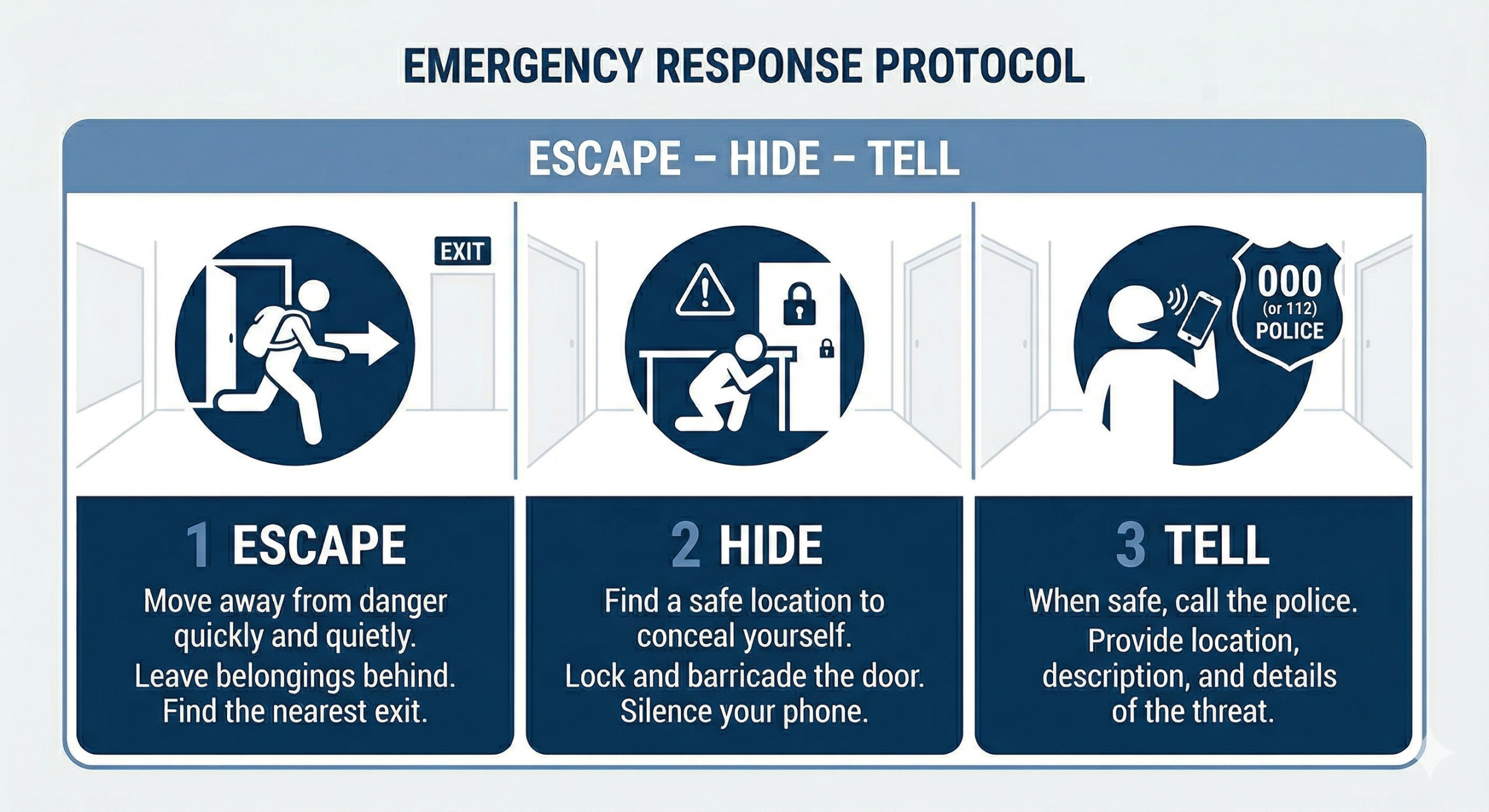
Escape Hide Tell

How Safe Are Your Public Places?

Safety in Our Crowded Places

With an ever-increasing occurrence of violence and a turbulent world, we need to consider how safe our public places are from terrorism and armed offenders — and whether that assessment should also extend to natural disasters.

Australia has historically been relatively safe from active shooter events, underpinned by our strict gun ownership laws. The Bondi Junction terrorist attack has since served as a stark reminder that we are not immune. It raises a critical question: have we adequately prepared for these types of incidents?

Have you considered what threats and vulnerabilities your business could face from armed offenders or a terrorist attack?

If you own or operate what is considered a “crowded” or “public place”, you carry a primary responsibility to protect the site and, by extension, the workers and public who visit it. This is a core element of your duty of care obligations under workplace health and safety legislation.

The 5 P’s of Emergency Preparedness

Prior Preparation Prevents Poor Performance

Your approach to managing your site should be proportionate to your risk and threat assessment, completed before implementing any strategies. It should be nationally consistent and, where possible, preserve the public’s enjoyment and use of your space.

What Constitutes a Public or Crowded Place?

Australia’s Strategy for Protecting Crowded Places from Terrorism (2017) defines crowded places as:

“Crowded places are locations which are easily accessible by large numbers of people on a predictable basis. Crowded places include, but are not limited to, sports stadia, transport infrastructure, shopping centres, pubs, clubs, hotels, places of worship, tourist attractions, movie theatres, and civic spaces. Crowded places do not have to be buildings and can include open spaces such as parks and pedestrian malls. A crowded place will not necessarily be crowded at all times: crowd densities may vary between day and night, by season, and may be temporary, as in the case of sporting events, festivals, or one-off events.”

Australian Institute for Disaster Resilience, Crowded Places Handbook, p. 19

Where to Find Guidance

The Australian National Security website provides extensive resources on protecting public places, including the “ESCAPE – HIDE – TELL” protocol for active armed offender incidents. The Australian Institute for Disaster Resilience Knowledge Hub also holds a comprehensive library covering all aspects of disaster management and resilience.

If you are responsible for managing a crowded place — such as a shopping centre, school, or event venue — it is prudent to ensure your standard operating procedures include strategies grounded in these national standards.

How Australian Fire Protection Can Help

Australian Fire Protection regularly delivers training in emergency preparedness, including active armed offender response for crowded places. Our team includes professionals working and studying at a postgraduate level in counter-terrorism and operational medicine.

 -  Active Armed Offender Response Training
 -  Crowded Places Risk and Threat Assessments
 -  Emergency Management Planning (EMP)
 -  WHS Compliance and Duty of Care Advisory


Escape Hide Tell

If you are responsible for managing a crowded place — such as a shopping centre, school, or event venue — it is prudent to ensure your standard operating procedures include strategies grounded in these national standards.

How Australian Fire Protection Can Help

Australian Fire Protection regularly delivers training in emergency preparedness, including active armed offender response for crowded places. Our team includes professionals working and studying at a postgraduate level in counter-terrorism and operational medicine.

 -  Active Armed Offender Response Training
 -  Crowded Places Risk and Threat Assessments
 -  Emergency Management Planning (EMP)
 -  WHS Compliance and Duty of Care Advisory

1 2 3 6
Matthew Francis Dean profile picture
Matthew Francis Dean
Informative and thorough training session The training was informative and up to date. Everything that needed to be covered was covered thoroughly and you could tell that the knowledge of the instructor came from a combination of real-world experience and familiarization with the current regulations.
Leanne Altoft profile picture
Leanne Altoft
Was well planned out and run. As always Steve was very informative
Jenny Helm profile picture
Jenny Helm
face-to-face training appreciated The face-to-face training was outstanding! The material was presented clearly and made easy to understand. The trainer was exceptionally supportive, always providing thorough and helpful answers to every question we had. This was a truly professional and reliable experience from start to finish!
Nalin profile picture
Nalin
Fire Safety Adviser Course conducted by Australian Fire Protection I recently completed the fire safety course conducted by Tim from Australian Fire Protection, and it was an outstanding experience. Tim has a remarkable ability to make the subject both engaging and easy to understand. He shared numerous real-life examples that not only captured everyone’s attention but also helped connect the theory to practical, everyday situations. The session was highly interactive, with participants encouraged to share their own experiences. This created a collaborative learning environment and helped reinforce the key concepts. Thanks to Tim’s clear explanations and the open discussions, I walked away with a thorough understanding of the course content and a much greater confidence in handling fire safety situations. A truly valuable and well-delivered course — highly recommended.
Kim l profile picture
Kim l
Well presented and lots of real life experiences It was refreshing to be trained by a real experience trainer, that is down to earth and very open to questions and gives support when needed. I have done lots of courses in my career and this course with the best presented. Total recommend to anyone looking for knowledge and training in this field
Jayde Logan profile picture
Jayde Logan
I completed a 3 day online FSA course with Tim. Ordinarily I find it difficult to engage in online group courses but Tim did a fantastic job delivering the training and i found it really enjoyable. I would 100% recommend this course to anyone looking to further their knowledge. Thanks for a great course!
Tallena Johnston profile picture
Tallena Johnston
FSA course I’ve been training and auditing for a couple of years now and this was the best training I’ve completed in a long time
Kate profile picture
Kate
100% Very engaging trainer and content - thanks heaps, I got heaps from this course!
Evangeline profile picture
Evangeline
Evangeline - FSA Course 100% Tim was an amazing course teacher. He explained everything in such amazing detail and helped me understand anything I was stuck on. He was very friendly and kept the webinar interesting over the 3 days
Michael Kitto profile picture
Michael Kitto
Tim is a fantastic educator. He is passionate, knowledgeable, and always goes over 100%.
ryan profile picture
ryan
fun informative course course was enjoyable!! had lots of fun learning, patrick was very professional and helped everyone out if needed, there were lots of laughs and course was very informative.
Kailesh Patel profile picture
Kailesh Patel
Highly recommend Highly recommend this
Simon Woolley profile picture
Simon Woolley
Highly informative! Course was packed with useful information & practical training. Useful anyone looking to navigate the complexity of the fire and safety industry.
Andrea Madeley profile picture
Andrea Madeley
Fire training Patrick is awesome he has heaps and knowledge and make the learning journey fun
Paul Brackin profile picture
Paul Brackin
I recently completed the FSA training and cannot recommend highly enough. Patrick is an amazing trainer and made the 3 days not only full of information but also very enjoyable. Also big shout out to Tim and Andrea who made the whole process so smooth and simple Thanks Again
Jessica Beresford profile picture
Jessica Beresford
Steve was a great trainer. Very insightful and happy to answer any questions I had.
Jessica Sheffield profile picture
Jessica Sheffield
The course is very informative and helps you learn real life skills that are easily transferred into the workplace. Excellent overall!! Great instructor!!
Carl Pump profile picture
Carl Pump
Fire Safety Advisor course was great. Lots of work over the three days, somewhat daunting but handled well.
Melissa Phillips profile picture
Melissa Phillips
We recently completed Fire Warden training with Tim, and it was an excellent experience. Tim was highly engaging, knowledgeable, and made the session both informative and easy to follow. He explained everything clearly, encouraged participation, and made sure everyone felt confident in their roles and responsibilities. The team was also fantastic to deal with when arranging the appointment times – very friendly, professional, and accommodating, which made the whole process smooth and stress-free. Overall, a great experience and I would highly recommend this course and Tim as a trainer.
Stefanie Balassone profile picture
Stefanie Balassone
Sam was very easy to deal with and very efficient. Have used this company for the last few years and would definitely recommend.
JIM M profile picture
JIM M
Patrick was great he had quite a few little helpful tips of how to remember the different types / classes of extinguishers, he is definitely a top trainer and explains things so as easy to understand.
A D profile picture
A D
Fantastic Fire Safety Adviser course! Clear, practical, and well-delivered (thank you Patrick). I highly recommend Australian Fire Protection.
Michelle Osmond profile picture
Michelle Osmond
Excellent three days of training for Fire Safety Adviser, our trainer Patrick was outstanding. Also communication from the rest of the team was amazing. Thank you
Alex Aguilar profile picture
Alex Aguilar
Had a great experience, learnt a lot and the trainer was very experienced with extensive knowledge.
Di B profile picture
Di B
It is a pleasure to work with the team from AFP, in particular we have worked with Lance, who's professionalism and quick responses to any enquiry has been first class. AFP staff who have attended on site have been informative, professional and engaging. I would highly recommend AFP.
WalkerB Gmail profile picture
WalkerB Gmail
Brilliant course. Patrick is very knowledgeable and keen to share the knowledge and experience. The FSA is a wonderful and informative course.
Sara Smith profile picture
Sara Smith
Awesome experience, so friendly and invaluable knowledge to take away!
John P Curtain profile picture
John P Curtain
After some false starts with other suppliers, Lance and the team at AFP came through with exactly the training we were after and responded to all queries super-quick. Happy to recommend. Well done AFP.
Thomas Ammar profile picture
Thomas Ammar
This course was very informative and provided a fun learning experience. Made the time go very quick and easy to retain the information. Patrick knows his stuff!
Dirk Diggler profile picture
Dirk Diggler
Well run course, very informative. Would recommend this training provider. Thanks Patrick
Jandd Contracting profile picture
Jandd Contracting
We recently engaged AustFirePro to conduct our annual fire safety and drill training, and we couldn’t be more impressed. Paul, the trainer, was outstanding—he managed to engage our staff effectively and ensured everyone clearly understood the key messages he conveyed. We highly recommend this business to others and will definitely be using their services again for our future fire training needs.
Brandyn Kelly profile picture
Brandyn Kelly
Highly recommend Australian Fire Protection. Provide a professional and thorough training program. Easy to work with and certification comes in a timely manner.
BEN “Highlights Seeker” M profile picture
BEN “Highlights Seeker” M
Australian Fire Protection is the best fire safety training I ever received, Patrick provied accurate and easy understadning lecture and training, meantime I enjoyed the class as he is funny and helpful! I definitely recommend my employees and friends to have fire safety training with them!
Gianna Ryder profile picture
Gianna Ryder
Great course. The trainers were relaxed and knowledgeable and willing to hear about everyone's different experiences.
Call Now Button